
GIVE YOUR ROOF A NEW LOOK!
Conditions
Sciatica & Disc Pain
End the Radiating Pain of Sciatica & Disc Injuries. Non-surgical, evidence-based treatments designed to decompress nerves and restore your quality of life.
Understanding Your Pain: The Root of Sciatica
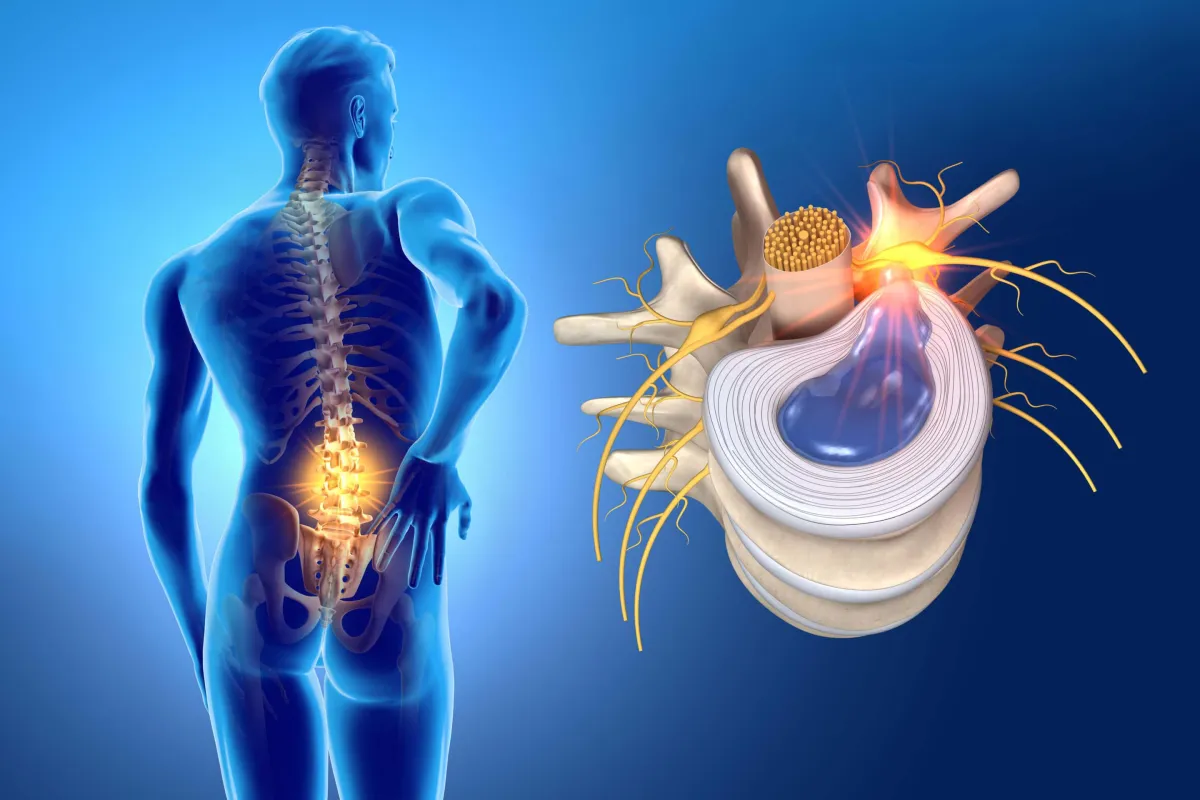
Many people mistake Sciatica for a condition itself, but it is actually a symptom of an underlying structural issue. The sciatic nerve is the largest nerve in your body, running from your lower back down through each leg. When a spinal disc—the shock absorber between your vertebrae—becomes herniated or bulging, it can protrude into the spinal canal and compress this sensitive nerve.
This mechanical pressure creates a "short circuit" in your nervous system, leading to a cascade of debilitating symptoms. If left untreated, the constant pressure can lead to chronic inflammation and long-term nerve damage.
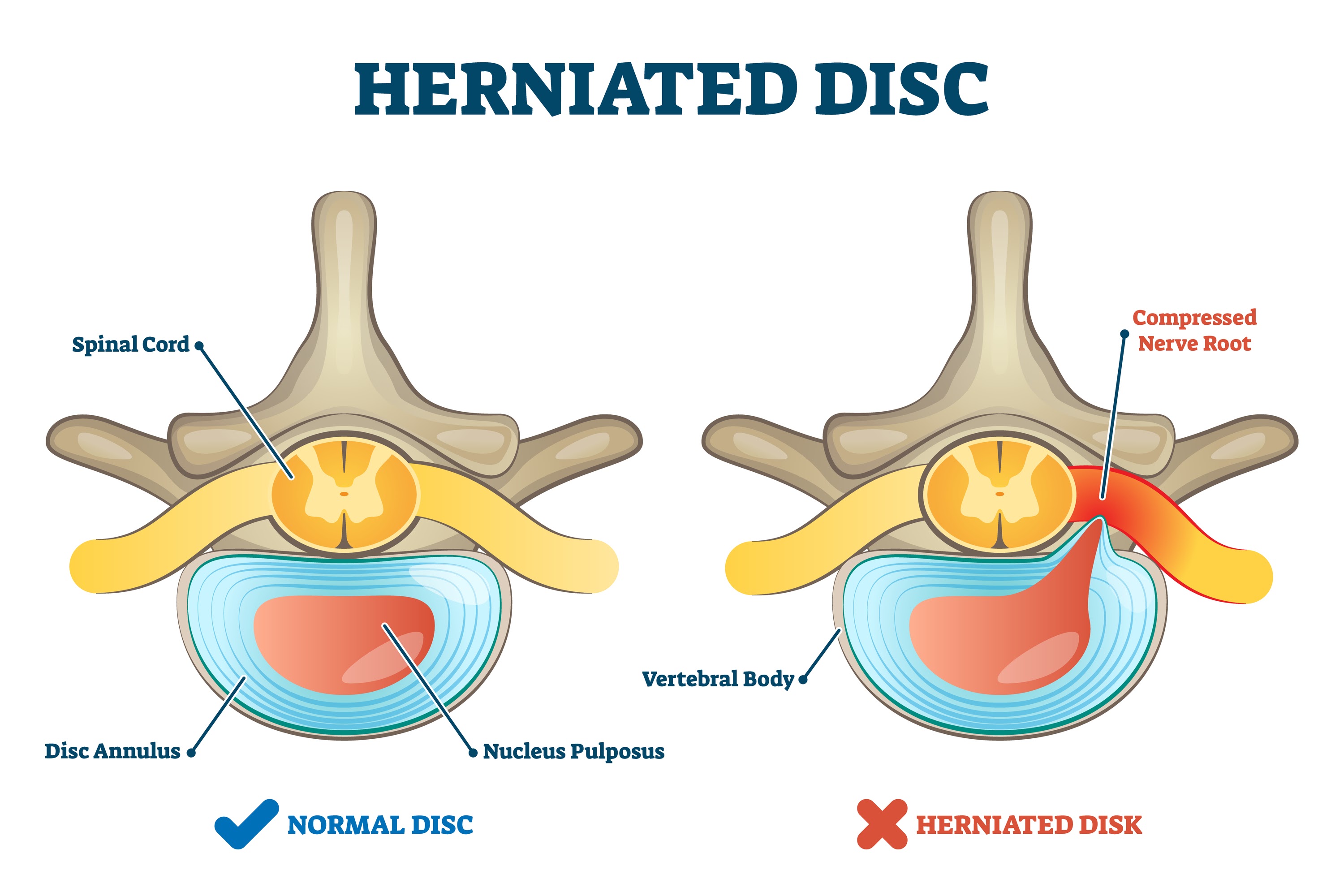
Herniated Disc
Comparison between a healthy spinal disc and a herniated disc, where the inner disc material bulges outward and can place pressure on nearby nerves, often causing back pain, leg pain, or symptoms of sciatica.
Common symptoms of disc-related nerve compression include:
Radiating Pain: A sharp, electric, or burning sensation traveling from the low back into the glutes and down the leg.
Numbness & Tingling: The "pins and needles" sensation often felt in the calf or foot.
Muscle Weakness: Difficulty lifting the foot (foot drop) or a feeling of instability when standing.
Increased Pain While Sitting: Pressure on the discs often intensifies when seated or leaning forward.
The Solution: Targeted Disc Restoration
At our clinic, Dr. Chavez focuses on a multi-tiered approach to resolve disc-related pain without the need for surgery or addictive medications. By combining spinal biomechanics with advanced technology, we don't just mask the pain—we work to physically change the environment of the damaged disc.
Our Recovery Protocol Includes:
Non-Surgical Spinal Decompression: Utilizing our Triton® technology to create negative pressure within the disc, encouraging the herniated material to pull back away from the nerve and allowing nutrients to flow back into the space.
Class IV Cold Laser Therapy: Flooding the damaged tissue with light energy to shut down deep-seated inflammation and speed up nerve repair at a cellular level.
Precision Chiropractic Adjustments: Realigning the surrounding vertebrae to balance the load on your spine, preventing future "wear and tear" on the affected discs.
Don't Wait for the Damage to Become Permanent
Nerve compression is a progressive issue. The longer the sciatic nerve is pinched, the higher the risk of long-term weakness or sensory loss. Dr. Chavez offers a comprehensive evaluation to determine if you are a candidate for our non-surgical disc restoration protocols.
Reviews
Get In Touch
Email:
[email protected]
Assistance Hours
Mon – Fri: 8:00 – 12:00 / 15:00 - 18:00
Sat: 8:00 – 12:00
Sun: Closed
Phone Number: (469) 727-1936
Discover Your Roofing Adventure Awaits Here.

